Ever since it won the Palme d’Or at Cannes last year, filmmaker Jafar Panahi has been riding a sizeable wave of critical praise with his latest hostage thriller It Was Just an Accident. It went on to win Best Film at the Sydney Film Festival and currently holds nominations for Best International Feature and Best Original Screenplay at the 2026 Academy Awards.
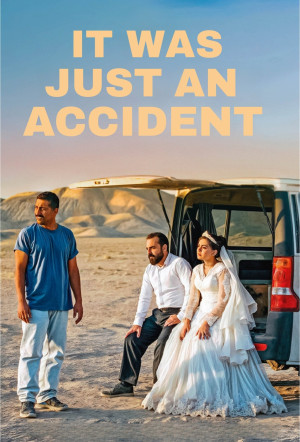


But it’s also not a film solely catering to the critics. As Flicks’ Katie Parker wrote last year: “Jafar Panahi’s Palme d’Or winning story of revenge and justice in the face of political oppression by the Iranian regime is a surprisingly comedic, crowd-pleasing affair—until levity gives way to dread and horror that has been bubbling beneath.”
So what makes it such a rave-worthy film?

It’s just a great premise
Outside of the powerful social and political themes fuelling the story, the premise alone makes for a cracking attention-grabber. By pure chance, car mechanic Vahid (Vahid Mobasseri) runs into Eghbal (Ebrahim Azizi), the officer who mercilessly tortured him years ago. Well, he’s not 100% sure it is Eghbal, but he’s 99% sure, so he impulsively kidnaps the man with the intent of burying him alive. But when the man gravely insists he’s not Eghbal, Vahid reluctantly drives around (with the man in the boot) to find fellow victims who might be able to make a positive ID.
One of Eghbal’s victims wants nothing to do with this dicey situation. Another’s keen to kill this potential stranger on the spot. When Vahid’s van ends up full of people with different axes to grind—and different opinions on how to grind them—it becomes a truck full of unstable dynamite.
But we’re not following hired assassins or former soldiers. These are everyday people with everyday jobs. Kidnapping doesn’t come naturally to them and there are moments where they can’t help but do the right thing right in the middle of the crime they’re collectively committing. The film finds some great humour and levity with that contrast—small moments to let the audience breathe before the big swings of suspense take the wind out of their lungs.

Jafar Panahi in Tehran Taxi

Jafar Panahi in No Bears
He’s just a great director
Panahi’s blended comedy with drama effortlessly in the past. 2015’s Tehran Taxi, 2018’s 3 Faces, and 2022’s No Bears star Panahi as a faux version of himself observing the lives of ordinary Iranians. Their charms and quirks interplay with strange superstitions and cultural contradictions, which poke fun at certain traditions while criticising larger powers of oppression and highlighting the need for social change.


It Was Just an Accident marks a significant shift for the director. Panahi doesn’t star here, possibly due to the film’s harder leaning into suspense, and while those prior films had a pleasantly cruisy energy to them, It Was Just an Accident coils with tension from the get-go and never stops tightening. There are two burning questions being hot potato’ed the whole time: is this guy really their torturer and what will they ultimately do with him? The climax, a 13-minute-long shot soaked in red light, answers both questions at once.
You’d think Panahi’s been making taut thrillers his whole career but his modus operandi has typically been about the plight of the everyday person in Iran, told with affection and empathy. That guiding light, his own experiences of Iran’s prison system, and the experiences of his fellow prisoners, has led him to create a film mirroring the pressures, anger, sorrow, and PTSD of real torture victims under the Iranian regime.

The Iranian regime is unjust
The buzz around It Was Just an Accident happens to circulate at a time where all 31 provinces of Iran have seen mass anti-government protests. The unrest started in Tehran as a rally against rampant inflation before morphing into general upset at the Iranian regime. This led to internet blackouts across the country, the deaths of thousands of protesters, and the arrests of tens of thousands more.
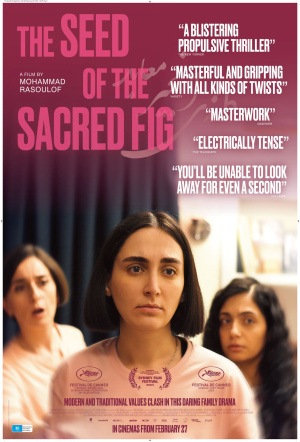
With great social unrest comes powerful protest art, and it was only last year we saw Mohammad Rasoulof’s The Seed of the Sacred Fig nominated for Best International Feature at the Academy Awards. It was not a film but a revolt, targeted directly at the unjust killing of 22-year-old Mahsa Amini in religious police custody during the 2022 Woman, Life, Freedom protests. Consequently, Rasoulof fled Iran when the regime put a warrant out for his arrest.

Panahi’s also no stranger to the regime’s ire. 2010’s This Is Not a Film sees him filming himself while under house arrest, explaining the film he tried to make that ultimately got him arrested. The completed film was smuggled out of the country on a USB stick hidden inside a cake.
It Was Just an Accident doesn’t feel smuggled out of conflict. It feels more pre-emptive of one. You may have already come across the corroborated facts about the current Iranian protests, but Panahi’s film makes you feel what they’re going through—and what feelings will remain in the years to come.