“Wine tasting” is not a phrase that conjures images of souped-up cloak-and-dagger adventures, with globetrotting plotlines, gasp-inducing developments and cliffhanger endings. And yet that’s exactly what Drops of God delivers: a sexy, twisty melodrama that launches a high-stakes, tournament-style narrative following the death of Alexandre Léger (Stanley Weber), the world’s foremost wine expert—who, of course, was French. And rather forward-thinking.
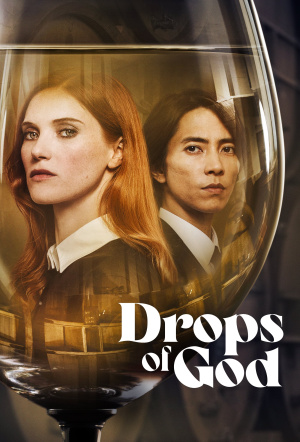


Instead of simply filling out a will and bequeathing his extraordinary wine collection—worth many millions of dollars—to the person or organization of his choosing, the wily devil devised a series of challenges for two competitors: his estranged daughter Camille (Fleur Geffrier) and Japanese protégé Issei (Tomohisa Yamashita). Both are freakishly gifted wine tasters, taking on challenges including identifying particular vintages and recreating others. The winner inherits Léger’s vast, scrumptious, finely aged fortune.
That’s the basic gist of the first season; the second—which we are currently in the thick of—is a slightly different affair (more on that in a moment). I won’t spoil the plot of either, writing this with the assumption that you might be entirely new to the series, given it doesn’t seem to have ignited a great deal of cultural conversation. But every wine lover should be watching this show. If it were a wine it would be something big, bold, full-bodied, and high in alcohol, leaving you craving the next mouthful—a delectable shiraz, perhaps.
Much of the drama hinges on the (initially very testy) relationship between Camille and Issei, plus the nature of their relationships with Alexandre. He and Camille had a long and complex history—they stopped talking to each other many years ago—and his relationship with Issei wasn’t simple either. Precisely how everyone is entangled, including side characters orbiting this central trio, is gradually revealed, amid mounting revelations and an accumulating pile of skeletons in the closet.
There are many scenes in which characters sample the sweet, sweet elixir of the vine. Sipping a beverage, no matter how delicious and intoxicating, doesn’t sound especially cinematic, but boy does this show juice it up, squeezing these scenes like ripe grapes. Early in the first season, for instance, Camille sits at a table with a friend who hands her a series of small bottles and asks her to identify their scents. As she takes a whiff, director Oded Ruskin cuts to Camille as a child, sorting through her father’s belongings—the scent triggering visions that collapse time and space.

Elsewhere in the first season, Camille is trying to identify the exact grape and vintage of a particular wine. We’re thrown into a vision from her mind’s eye as she mentally walks through her father’s collection, hesitating over which dusty shelf to select from. These scenes lean into the concept of a memory palace: a well-known mnemonic technique in which a person mentally revisits a familiar location (like the home they grew up in) to retrieve specific information. Memory palaces are well suited to film and television, because they literalise abstract processes, turning recollections into tangible settings.
The second season sustains these striking visual flourishes, opening with a deep-sea diving sequence that feels untethered from time and place. The diver is Issei, who this season becomes the character most prone to wine-triggered, out-of-body reveries, connected to deep-seated fears and a newly awakened spiritual hunger. The premise that sets the plot in motion once again stems from a posthumous challenge from Léger: the identification of a particular wine that eluded him throughout his life.

It would’ve been tempting for the writers to go bigger, louder, and wilder: more globetrotting, more jiggery-pokery, double down on Da Vinci Code-style shenanigans. Instead, while still delivering plenty of heady drama, Drops of God moves in the opposite direction, toward a more intimate, character-driven experience. There’s no shortage of pretty scenery (mental note: add Georgia to the bucket list!) and, of course, ample wine-world intrigue, including plotlines about a brilliant vineyard on the brink of collapse, and behind-the-scenes power plays at a prestigious wine award.
But Drops of God wisely anchors itself in its characters and their shifting interpersonal dynamics. I was initially sceptical about the need for a second season; now, I would happily pour another glass for a third.